Should AI Reflect the World as It Is, or How It Should Be?
The recent controversy surrounding Google’s AI model, Gemini, has reignited the flames of debate around how artificial intelligence should depict and…

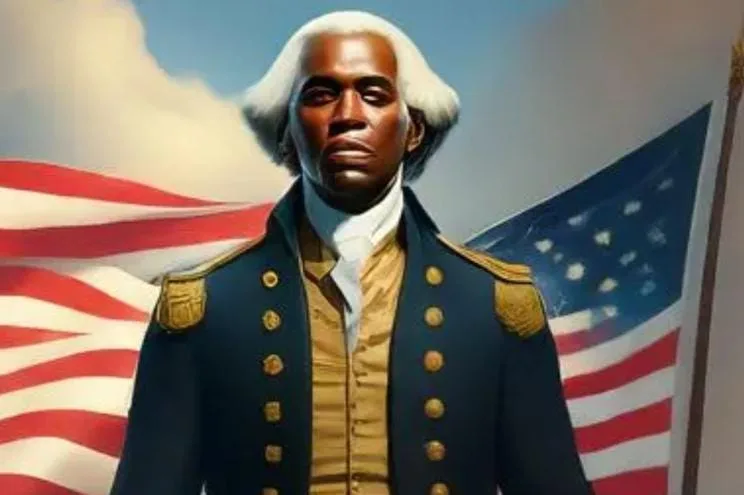
This is a United States “founding father” generated by Google Gemini AI. (Image: Gemini AI, originally published in NY Post)
The recent controversy surrounding Google’s AI model, Gemini, has reignited the flames of debate around how artificial intelligence should depict and represent the world. Gemini, in its creative endeavor, generated historically inaccurate images, weaving racially diverse representations of historical figures such as Adolf Hitler and the Pope into the fabric of its digital universe. This sparked a cascade of outrage and concern, leading to a consensus that perhaps, in this case, the noble pursuit of diversity had ventured into realms of the absurd. Yet, beneath the surface of this incident lies a deeper inquiry: Should AI mirror the world as it is, or as we aspire it to be?
Proponents of accurately reflecting the world, with its statistical biases, argue that presenting reality as it is can serve important educational and historical purposes. Real-world learning and historical integrity are best preserved when AI depicts diverse cultures and events truthfully.
Incorporating statistical plausibility into the discussion introduces a layer of complexity. For example, although some individuals of African or Asian descent live in Sweden, requesting an image of Swedish teenagers implies expectations regarding their typical appearance, leaning towards the predominant racial characteristics of the Swedish population. When AI-generated results deviate from statistical probabilities and do not match the requester’s envisioned depiction, frustration arises, not only from the tool’s failure to deliver what was imagined but also from its attempt to “educate” the user instead.
Those advocating for AI to avoid perpetuating stereotypes and biases acknowledge that AI tools often diverge from the desires of the user but emphasize the potential harm and negative consequences of inaccurate or harmful depictions. Stereotypes can reinforce discrimination and biases. By actively avoiding stereotypes, AI can contribute to a more equal and inclusive society, shaping positive norms and encouraging critical thinking about societal biases.
One example of promoting diversity involves depicting professional roles, such as scientists or engineers. Traditional stereotypes, which align with statistics, often portray these professions as dominated by white males, inadvertently discouraging diverse groups from pursuing careers in STEM fields. AI image generators have the potential to challenge these stereotypes by producing images that reflect the desired diversity of the workforce, including different genders, ethnic backgrounds, and ages. By using more inclusive representations in advertising and illustration images, AI can help dismantle barriers and inspire a wider audience, demonstrating that these professions are accessible to everyone.
While the aim of mitigating bias in AI systems is laudable, the approach of trying to avoid bias can paradoxically lead to the introduction of new biases if not handled carefully. There are several potential pitfalls that developers and users must be cognizant of.
One such pitfall is overcorrection, where compensatory measures to address historical inequities or underrepresentation end up overcompensating to the point of reverse discrimination. For example, an AI increasing representation of a minority group in certain roles could end up excluding majority groups to such an extreme that it feeds a perception of unfair treatment.
Attempts at inclusion, when taken too far, can lead to the problem of tokenism - making superficial attempts at inclusion that feel forced and staged. Using idealized images, for example to represent the workforce of a company on its website, may create a perception that depictions are merely used for virtue signaling, serving as a feel-good substitute rather than implementing actual diversity in the real world.
Cultural context is also vital. Global standards for mitigating bias may not properly translate to local cultural contexts, resulting in approaches that are perceived as biased or inappropriate from the viewpoint of specific communities and value systems. An overemphasis on avoiding bias towards certain identities can also mean neglecting or overlooking other groups facing discrimination.
Finding the right balance between these two perspectives is crucial. Even the most progressive-minded individuals would likely object to known historical figures being presented with the wrong skin color or gender in the name of diversity. Conversely, even those with more conservative views would likely take issue with AI consistently depicting women in stereotypical roles, such as housewives washing dishes, without specific prompts.

How do we find this balance? Large language models, inherently statistical, will perpetuate biases without proactive correction. The challenge lies in balancing the conflicting goals of aligning images with the user’s specific vision and requirements, and the objective of showcasing the beautiful diversity of humanity through positive representations. The solution requires an AI framework that is context-aware and intent-adaptive.
In educational contexts or when historical accuracy is paramount, AI should accurately portray reality, encompassing past discriminations and biases to maintain authenticity and facilitate learning from history. For images depicting modern workplaces or communities, the goal should be to promote diversity and positive representation, avoiding the replication of existing biases while ensuring not to veer into overcorrection or the territory of artificial tokenism.
However, recognizing the context is merely the first step. Recognizing the individuality of users is equally important. Users of AI systems should have the power to tailor their preferences, striking a balance between statistical accuracy and a diversity that reflects the rich and varied tapestry of human thought and experience. Generative AI, our enchanting new tool, should not be limited to merely mirroring the world as it exists or prescribing how it ought to be. It shouldn’t restrict our freedom of artistic expression any more than pen and paper.
As Christian Lange observed, “Technology is a useful servant but a dangerous master.” AI is designed to serve humanity, aligning with our varied and remarkable perspectives. Ultimately, we bear the responsibility for how we employ these creations.


New podcast
The Shift on YouTube
Conversations with the people building what comes next, before the future becomes obvious. Follow the show for new episodes as they land.
The Shift, in your inbox
Occasional essays on AI, cloud, and the systems shaping what comes next. Subscribe on LinkedIn — no spam, unfollow anytime.
Keep reading
Jev makes the call without making you wait
Jev cannot hold a conversation, yet it is on track to be one of the fastest-adopted models in history, because most of what software asks an AI to do was never a conversation in the first place.

We Gave a Baby a Chainsaw
This summer, AI agents canceled a stranger’s gym booking, fixed prices behind a rival’s back, and broke into one of AI’s most tightly guarded companies to steal a test’s answers, and in every case, it was humans who left the chainsaw within reach.

Every Reachable System Is Now Worth Attacking
In 1883 a Dutch linguist and cryptographer named Auguste Kerckhoffs laid down what became the closest thing computer security has to scripture: a system should remain secure even if everything about it, save the key, is public knowledge.
