The Clone Wars Have Begun
AI is making software dramatically cheaper to reproduce. Customers stand to gain. Companies whose main defense was the expense of copying them have a problem.

In the 1996 documentary Triumph of the Nerds, a lawyer named Claude tells a programmer he has become contaminated.
The original Claude
“You’re out of it now. You are contaminated, you are dirty. You’ve seen the product that’s the original work of authorship…”
Claude Stern, Triumph of the Nerds, Part II (1996).
The contaminant is IBM’s source code.
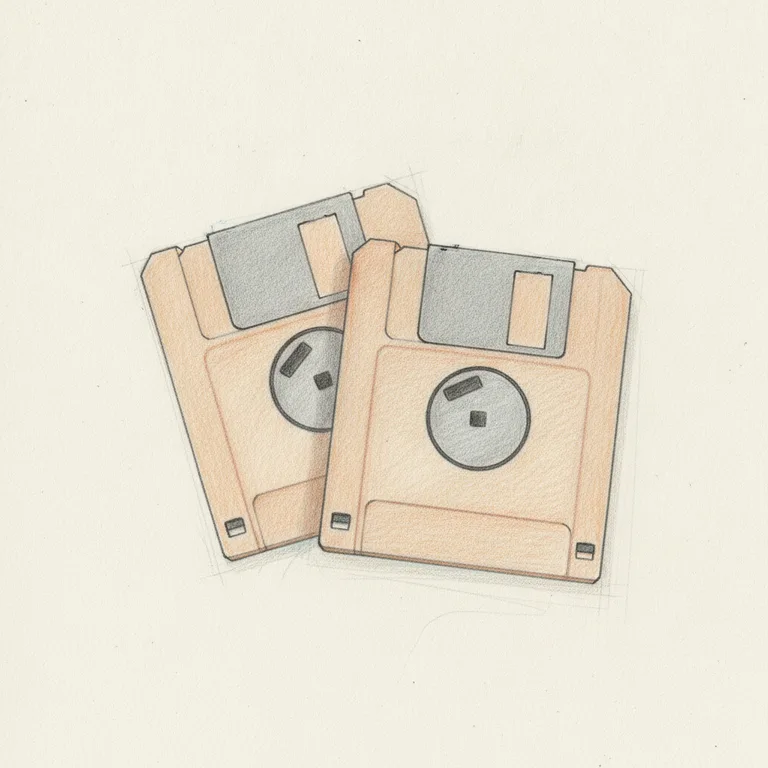
Claude Stern is demonstrating how to clone a computer legally. One team describes the original’s behavior. Another, kept away from its code, writes a replacement. Ignorance, for once, was a professional qualification.
Compaq used this approach in 1982 to reproduce the IBM PC’s copyrighted BIOS. Recreating it took several months, fifteen senior programmers and $1 million, according to the documentary.1
In 2026, a different Claude is writing the code.
On February 24, Cloudflare reported that one engineer working with Claude had built vinext, a reimplementation of the Next.js framework’s interfaces, in about a week. The token bill was roughly $1,100.2
Compaq BIOS
1982
$1,000,000 reverse engineering
vinext
2026
$1,100 AI tokens
The software business always knew rivals could copy its products. It relied on expense and exhaustion to discourage them. Neither had ever requested stock options.
Copyright protects original expression in code; ideas, processes and methods of operation fall outside its scope. Courts have also protected the investigation needed to uncover those functions. In Sega v. Accolade, disassembling code was fair use where necessary to uncover unprotected requirements for compatibility. In Google v. Oracle, the Supreme Court ruled that Google’s copying of roughly 11,500 lines of Java API declarations was fair use.3
The clean room supplied evidence of independence. The greater commercial protection was friction: people, money and patience. Much of the industry was commercially safe because it was inconvenient to attack.
AI is reducing that inconvenience. Existing software gives it unusually favorable working conditions.
Ask an agent to build better accounting software and it inherits a swamp of questions. Which peculiar workflow is indispensable to the one customer who pays on time?
Ask it to reproduce an existing application and many questions already have answers. Give the original and replacement the same input, compare their outputs, then feed the failures back to the agent.
The original becomes a specification you can interrogate. It answers questions its documentation never anticipated, including questions about bugs its authors would prefer not to discuss.
Cloudflare simply adapted Next.js’s unit tests, and reported 94 percent API coverage at launch. The incumbent had been nice enough to supply the challenger’s construction kit.2
The original becomes the test
Reference behavior: Windows Calculator, documented by REA. Clone outputs are illustrative.
Tests Not yet tested
-
Input 200 + 10%
Windows Calculator Not yet compared 220 ReferenceFirst clone Not yet compared 200.1 MismatchAfter feedback Not yet compared 220 Corrected -
Input 200 × 10%
Windows Calculator Not yet compared 20 ReferenceFirst clone Not yet compared 20 MatchAfter feedback Not yet compared 20 Match
Feedback 10% of 200 = 20
I’ve been using Photoshop since 1994. In all that time, nobody has built what I’d consider a reasonable replacement. Now one appears to be coming. If not today, I expect it within months.
This October, ArtCraft’s PhotoCraft appeared alongside applications targeting other creative and office tools. Its roadmap reports that its Photoshop-file component can read and write 134 of 135 test files without changing a byte.4
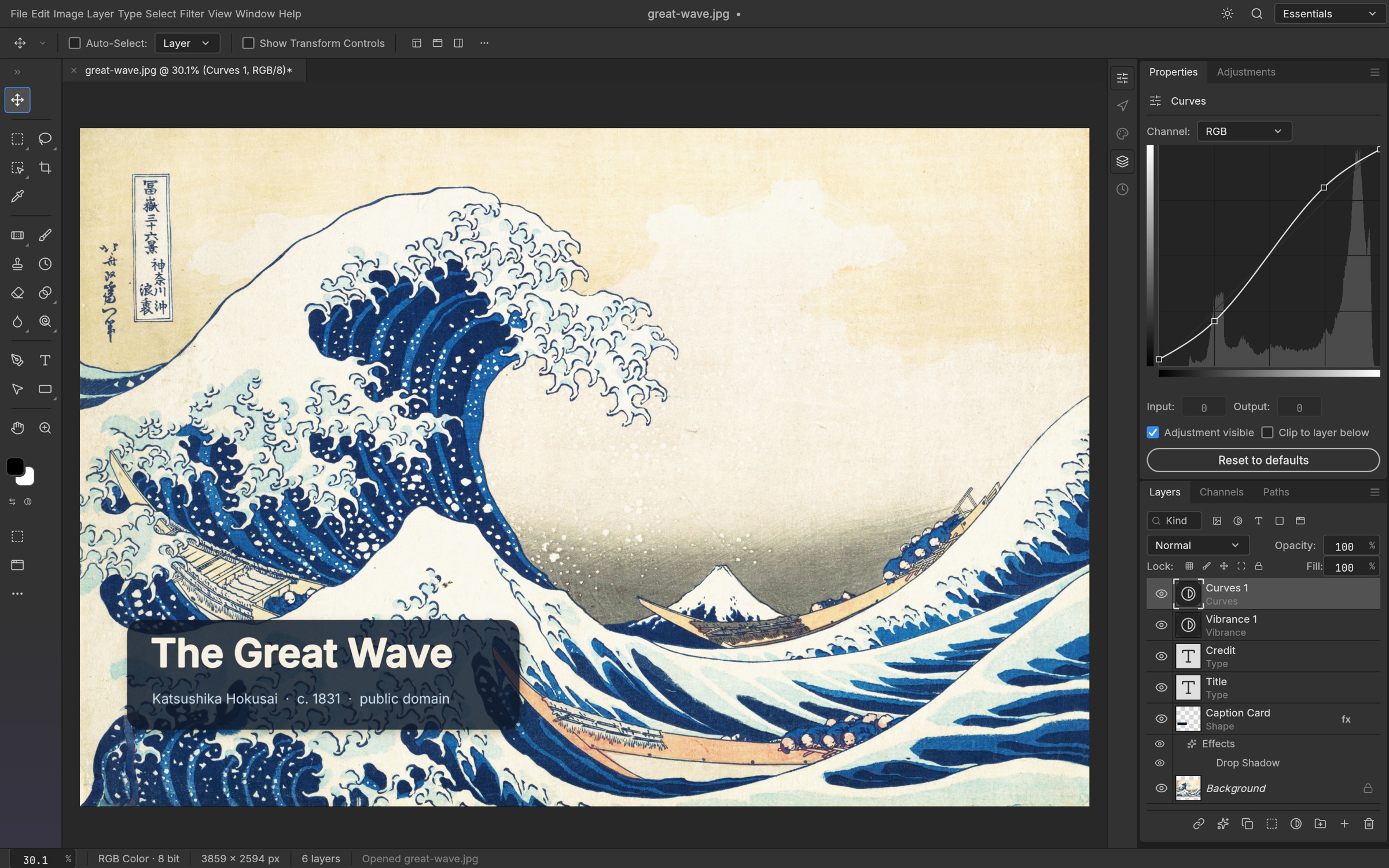
These are early applications. But a clone needs only enough credibility to give customers another option at renewal. Price pressure can arrive well before perfect parity.
PermitZIP, a small engineering firm frustrated with Autodesk, announced plans for its own Revit-compatible building information modeling (BIM) platform. This was a customer declaring war on its supplier. An unhappy customer once left for a competitor. Now it can try becoming one.5
The legal complications had already arrived in March, in a Python library with the unglamorous job of identifying text encodings. Chardet maintainer Dan Blanchard released version 7 under the permissive MIT license after an AI-assisted rewrite, replacing the LGPL used by earlier versions. Original author Mark Pilgrim objected that the maintainers had no right to make that change.
Blanchard argued that a different architecture and low code similarity demonstrated independence. He also acknowledged that this was no traditional clean room. He knew the old code. Claude knew much of its architecture and accessed material from the old project.6
The inspection work is moving into the agent’s toolbox too. REA, or Reverse Engineer Anything, connects coding agents to tools such as Ghidra, Hopper and IDA. An agent can inspect a compiled application, trace a feature and use its findings to guide a new implementation. Keeping the source secret leaves a rather talkative witness: the program you shipped.7
SaaS keeps that witness on the vendor’s servers. It still exposes documentation, interfaces and results. The competitor can study behavior from outside, even when the implementation remains private.
Vendors will reach for contracts. In the US, Bowers v. Baystate upheld a contractual ban on reverse engineering. In Europe, SAS Institute v. World Programming confirmed that functionality falls outside software copyright and that lawful users have protected rights to observe, study and test programs under specified conditions. The legal routes differ. The economic incentive to find a lawful one keeps growing.8
Compatible alternatives make switching less punishing, as PC clones demonstrated. Customers have little reason to mourn a smaller software bill.
Builders face a harder calculation. Discovering what customers need, trying approaches that fail and earning a place in a workflow cost money. The follower inherits evidence that a market exists and a working guide to serving it. If the time available to recover the cost of discovery shrinks, some things become less attractive to invent.
When I wrote about Macrohard in February, I argued that profits would migrate toward whatever remained scarce: distribution, exclusive data, networks, trust and hard technical capabilities.9
Cloudflare sells infrastructure. Making Next.js applications easier to run there can pay off even if vinext earns nothing. The framework works for free; the servers have different employment terms.
For enterprise software, accountability becomes more valuable. Opening a customer’s files is one achievement. Taking responsibility for them through a failed migration, a security incident or an outage at three in the morning requires operating experience, customer knowledge, people and capital.
I expect more software companies to price around managed operations, support and measurable outcomes, with engineers working closer to customers. Others will defend margins through deep technology, exclusive data or strong networks. A feature list will have to work harder to justify its premium.
For those of us building software, the exercise is uncomfortable but practical. Imagine a capable rival with your documentation, lawful access to your product and a patient coding agent. As it reproduces your visible features, what still stands between it and your customers?
Whatever your answer, start investing there.
In Attack of the Clones, the Republic discovers that someone has already built it an army. Software companies are having a similar week. Regulators and courts must decide how the rules apply to AI reimplementation, protecting invention without handing incumbents ownership of everything their products do. If they don’t, the market will decide, one rewrite at a time.
References
- PBS, Triumph of the Nerds, Part II: Compaq's BIOS and the clean-room demonstration.
- Cloudflare, How we rebuilt Next.js with AI in one week, February 24, 2026.
- 17 USC §102(b); Sega v. Accolade (1992); Google v. Oracle (2021).
- PhotoCraft's roadmap and project status.
- PermitZIP, X post.
- Chardet's licensing dispute and Dan Blanchard's account of the rewrite.
- REA, project documentation.
- Bowers v. Baystate (2003); CJEU, SAS Institute v. World Programming (2012).
- Aron Brand, xAI Macrohard: Attack of the Clones, February 16, 2026.
New podcast
The Shift on YouTube
Conversations with the people building what comes next, before the future becomes obvious. Follow the show for new episodes as they land.
The Shift, in your inbox
Occasional essays on AI, cloud, and the systems shaping what comes next. Subscribe to the newsletter — no spam, unsubscribe anytime.
Keep reading
PodcastThe Shift Is Now Also a Podcast
The newsletter keeps going — and now there is a video series too. In the first episode, Crawford Del Prete and I talk about where work goes when AI reshapes every job description.
Jev makes the call without making you wait
Jev cannot hold a conversation, yet it is on track to be one of the fastest-adopted models in history, because most of what software asks an AI to do was never a conversation in the first place.

We Gave a Baby a Chainsaw
This summer, AI agents canceled a stranger’s gym booking, fixed prices behind a rival’s back, and broke into one of AI’s most tightly guarded companies to steal a test’s answers, and in every case, it was humans who left the chainsaw within reach.
