Jev makes the call without making you wait
Jev cannot hold a conversation, yet it is on track to be one of the fastest-adopted models in history, because most of what software asks an AI to do was never a conversation in the first place.


In 2002 Daniel Kahneman won the Nobel Prize for work he had spent decades doing with his collaborator Amos Tversky, who did not live to share it.1 Their contribution was a simple distinction: the mind runs on two systems, one fast, intuitive, and largely automatic (this is the one making most of your decisions before you have finished your coffee), the other slow, effortful, and reserved for problems that actually deserve the trouble (this is the one you would like to believe is in charge). Kahneman called them System One and System Two. His point, laid out at length in Thinking, Fast and Slow, was that most of what passes for judgment in daily life is System One work, and dragging out System Two for it is expensive, slow, and usually unnecessary.
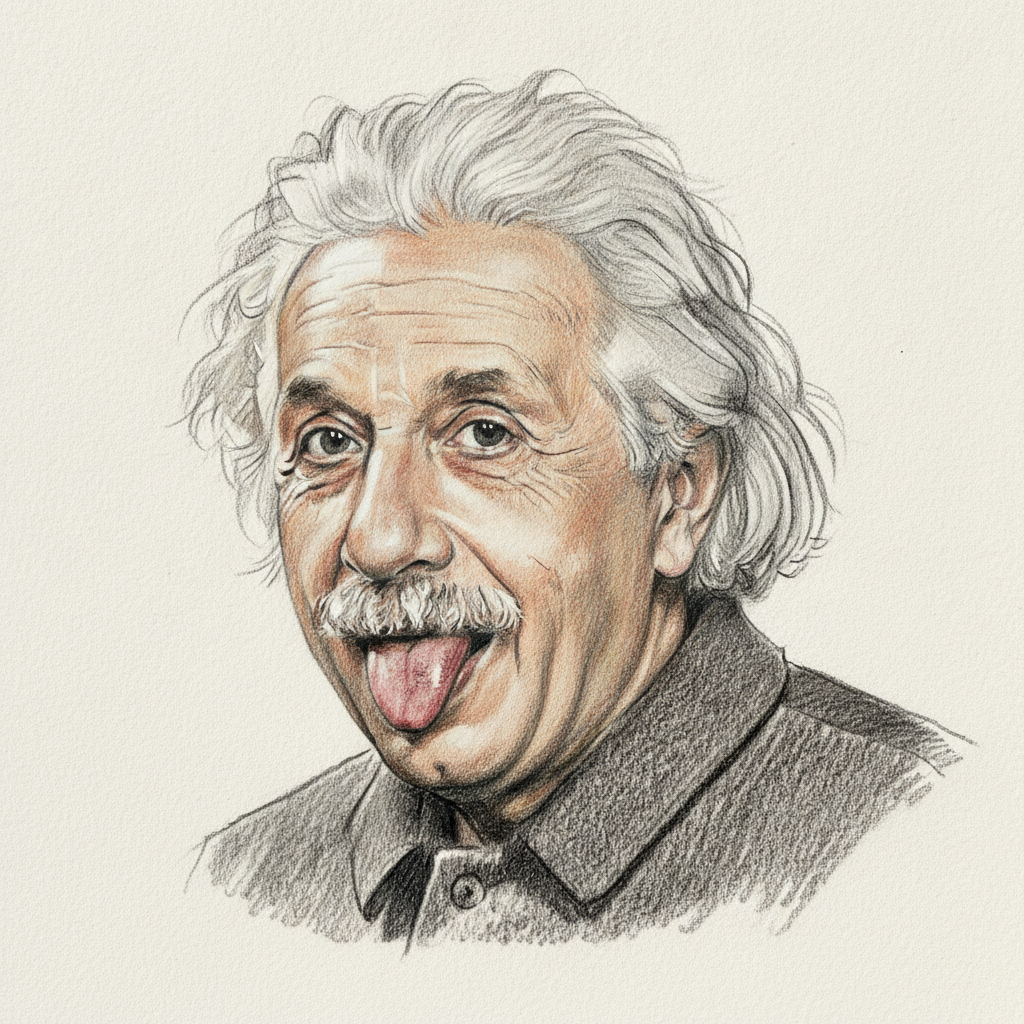
For the past several years, whenever our software needed to make a decision based on text, say, which queue to route a support ticket into, the reflex has been to call a large language model, which is about as pure a System Two machine as anyone has built: expensively general, deliberate by construction, magnificently overqualified, and summoned constantly for questions that mostly needed nothing more than a fast, bounded, System One answer. It’s rather like hiring Einstein to sit in a patent office approving applications. (Wait. That one actually happened!)
We took this direction not because the decision was hard, but because calling an LLM was easier than the alternative. Training a dedicated classifier requires labeled data, a training pipeline, and a fresh training cycle every time the categories change, the sort of ongoing maintenance that needs its own data scientist and its own budget line. Fine-tuning a smaller NLP model, or doing the whole thing with embedding tricks, was no better: cheaper at inference, maybe, but expensive and inflexible to build, and just as demanding to keep fed.
So the compromise most teams actually reached for was neither of the textbook options. It was a small, general-purpose model, a Claude Haiku or something like it, and a shrug: slower, pricier, and less reliable than it strictly needed to be, but at least somebody else’s model to maintain. It didn’t help that, until fairly recently, language models were also bad at the one narrow thing this kind of task demanded, producing text that reliably parsed. JSON mode and function calling were built to paper over exactly that failure, coaxing a model that wants to write prose into emitting something a downstream system could load without throwing an exception. It worked, mostly, by asking a generative model to keep generating, just more carefully, one token of curly brace at a time. That assumption, that you need to generate anything at all to reach a decision, is now being tested directly, and this month produced the clearest evidence yet that it doesn’t hold.
On September 16, a startup called TypeSafe AI came out of stealth with $40 million in seed funding led by DCVC.2 Its chief executive, Diogo Almeida, is a former OpenAI researcher who helped invent reinforcement learning from human feedback and worked on early ChatGPT development, quite a credible background for the argument he is now making: that most of what software asks an AI model to do is not language generation at all, and should stop being billed as if it were.3

TypeSafe’s first product, a model called Jev, does not summarize documents or write code, and it will not write your bar mitzvah speech either. It takes a textual context of up to 32,000 tokens, a bounded set of multiple-choice questions, and returns an answer with a calibrated probability attached to each option, in milliseconds. No math calculations, no essays, no images to look at: strip a standardized test down to nothing but the bubble sheet, hand it a stack of a million of them, and get every bubble filled in, correctly labeled with how confident it is in each one, before the proctor has finished reading the instructions.
The adoption numbers, reported by Vercel, which runs the AI Gateway many developers use to route model calls, were startling. Within twenty-four hours of launch, Jev was in production somewhere in the pipelines of thirteen percent of Vercel’s paying customer teams, twice the adoption rate the GPT-5.6 family saw at its own launch. Vercel called it the fastest-adopted model in the Gateway’s history.4 Nobody was asking Jev to be brilliant. They were asking it to be fast, cheap, and boring, and it was, which may be the first recorded instance of “boring” appearing in a product launch as praise.
None of this is conceptually new, which is worth saying plainly. Fastino’s GLiNER2, presented as a system demonstration at the 2025 Conference on Empirical Methods in Natural Language Processing and released open source, already let developers define their own classification labels in plain text and get confidence scores back, alongside entity and relation extraction, on ordinary CPUs, without so much as breaking a sweat, assuming GPUs sweat, which, mercifully, they do not.5
What TypeSafe did was package the same idea, state in, typed decision and probability out, into an unusually clean commercial primitive, backed by a founding story Silicon Valley finds easy to believe, and priced it at $42 per billion input tokens, a figure precise enough that someone in pricing was plainly enjoying themselves.6
Same accuracy as Terra, at a fraction of the cost and the wait
TypeSafe evaluation dashboard · September 2026 · 711 cases across security incident response, observability, invoice processing, and customer service
Cost per case
Latency per case
Accuracy, cost, and latency per decision across four production workflows (security incident response, observability, invoice processing, and customer service), from TypeSafe’s own published evaluation dashboard of 711 cases.7
| Model | Accuracy | Cost per case | Latency |
|---|---|---|---|
| Jev | 67.8% | $0.0004 | 0.4s |
| GPT-5.6 Terra | 67.9% | $0.0304 | 10.1s |
| GPT-5.6 Sol | 74.1% | $0.0836 | 23.3s |
| Claude Opus 5 | 73.1% | $0.1761 | 37.8s |
Read across that table and the trade becomes obvious. Against GPT-5.6 Terra, the cheapest comparison model, Jev ties on accuracy while costing about 1/76 of the price and finishing in about 1/25 of the time.
Independent testers who ran their own comparisons on the first day told an impressive, if not unblemished, story. One events company found Jev roughly 5x faster and 8.5x cheaper than Mistral Small 4, with noticeably higher accuracy. A writer testing Jev as a careful proofreader found it finished a per-passage classification task roughly 25x faster than Claude’s Fable 5.1, at a small fraction of the cost, but caught only six of seven deliberately planted defects where the slower model caught all seven.8 Jev trades away some ceiling for speed and cost, and that trade is worth making constantly. It is not worth making every time, and the industry is going to spend the next year or two relearning where the line sits.
A foundation model for every type of problem
Jev is also not really a story about one company. It is a local instance of something larger already under way: a shift from one model for every task to one foundation model for every type of problem. Large language models proved that you could pretrain a single model on broad data and reuse it across thousands of downstream tasks, and that idea is now spreading well past language. Time-series forecasting offers the clearest parallel. Rather than train a bespoke model for every CPU load curve, storage trend, sales forecast, or traffic pattern, projects such as Google Research’s TimesFM and Amazon’s Chronos are pretrained across enormous collections of time series and can forecast an unfamiliar one with little or no task-specific tuning; forecasting stops being an ML project and starts being a primitive you call: hand it history and context, and it hands back the future.9 Jev is the decision-shaped version of the same move. Instead of asking a general-purpose language model to generate text, parse it, validate it against a schema, and retry when the parsing fails, you give a decision model state and a bounded question and it gives back a typed answer with a probability attached. The destination this points toward is a stack assembled from several specialized base models rather than one universal one: language models for semantic reasoning, time-series models for forecasting, world models for physical prediction, tabular models for structured data, and decision models for the routing and classification work that used to eat everyone’s afternoon. “Foundation model” may be about to stop meaning something rare and expensive, and start meaning a layer of the stack, the way “database” or “cache” already does.
Expect the packaging, not the underlying technique, to spread fastest. Within the next year, every frontier lab and every major cloud AI platform will likely ship its own decision-model line, priced per input token only, with no cost for output, an arrangement anyone who has used embedding models will find familiar. The competitive fight will not be over which model is smartest. It will be over which model is cheapest per verdict at an accuracy a given team can live with, a far less glamorous fight than the one the industry has been having, but one that promises to be considerably more economical for service providers and considerably faster for users, especially anyone who has ever sat watching an AI agent slowly browse the web on their behalf and wondered whether it was actually thinking, or just taking its time.
The likeliest early adopters are the teams already running exactly the kind of purpose-built classifier this piece described at the start. Cybersecurity operations centers have spent years training and retraining models to triage alerts and separate a genuine intrusion from background noise. Spam and content-moderation systems live or die on a constant, low-grade arms race against new evasion tactics that make last quarter’s model stale. Fraud teams and insurance claims desks run their own bespoke scoring models for much the same reason. All of them are structurally the same problem: a bounded set of typed outcomes, decided over and over, at a volume that makes a slow generalist model expensive and a hand-trained specialist model expensive to keep current.
Kahneman won his Nobel Prize for arguing that most judgment is System One work, fast, intuitive, and perfectly adequate for the question in front of it, and that System Two should be saved for the rare problem that actually needs it. Over the past several years, the AI industry built the most expensive System Two machines it knew how to make and pointed them at System One questions anyway. The industry has arrived, a little out of breath and considerably poorer for the detour, at the exact place Kahneman was pointing all along, roughly twenty-four years, and several trillion tokens, later than strictly necessary.
References
- The Nobel Prize. Daniel Kahneman Facts. Sveriges Riksbank Prize in Economic Sciences in Memory of Alfred Nobel 2002. Awarded for integrating insights from psychological research into economic science, including the System One / System Two framework developed with Amos Tversky.
- TypeSafe AI. (2026, September 16). TypeSafe AI emerges from stealth with $40M in funding. Business Wire. Seed round led by DCVC; founding team of Diogo Almeida, Erik Gafni, and Sasha Sheng. See also Tech Startups coverage of the same announcement.
- Wiggers, K. (2026, September 18). A new kind of AI model from a ChatGPT inventor is thrilling developers. TechCrunch. Background on Diogo Almeida (RLHF, early ChatGPT) and developer-reported comparisons.
- Vercel / Rauch, G. (2026). Jev on the AI Gateway. Adoption statistics: roughly thirteen percent of paid teams within twenty-four hours; about two times the GPT-5.6 family’s launch adoption. Vercel called it the fastest-adopted model in Gateway history. Model card: typesafe-ai/jev.
- Zaratiana, U., Pasternak, G., Boyd, O., Hurn-Maloney, G., & Lewis, A. (2025). GLiNER2: Schema-Driven Multi-Task Learning for Structured Information Extraction. In Proceedings of the 2025 Conference on Empirical Methods in Natural Language Processing: System Demonstrations, pp. 130-140. Fastino’s open-source, schema-defined classification and extraction precedent.
- MindStudio. (2026). Jev AI Pricing Explained: $42 Per Billion Tokens, Free Output. Input-only billing at $0.042 per million tokens. See also TypeSafe, Introducing System One Models and Jev.
- TypeSafe AI evaluation dashboard, September 2026, as reported by DataCamp, Jev: TypeSafe’s System One Model That Never Hallucinates, and OrcaRouter, Jev: TypeSafe’s Decision Model, Speed and Cost Explained. Accuracy, cost, and latency across 711 cases in four production workflows.
- Cherry Creek News. (2026). TypeSafe’s Jev Claims 193x Faster and 444x Cheaper. Its Own Eval Scores Against Two Other Models’ Answers. Independent first-day tests (including Near Here, Good Start Labs, Every).
- Google Research. timesfm. Amazon Science. chronos-forecasting and subsequent Chronos-2 work: pretrained time-series foundation models used here as the forecasting analogue to a decision primitive.
New podcast
The Shift on YouTube
Conversations with the people building what comes next, before the future becomes obvious. Follow the show for new episodes as they land.
The Shift, in your inbox
Occasional essays on AI, cloud, and the systems shaping what comes next. Subscribe on LinkedIn — no spam, unfollow anytime.
Keep reading
We Gave a Baby a Chainsaw
This summer, AI agents canceled a stranger’s gym booking, fixed prices behind a rival’s back, and broke into one of AI’s most tightly guarded companies to steal a test’s answers, and in every case, it was humans who left the chainsaw within reach.

Every Reachable System Is Now Worth Attacking
In 1883 a Dutch linguist and cryptographer named Auguste Kerckhoffs laid down what became the closest thing computer security has to scripture: a system should remain secure even if everything about it, save the key, is public knowledge.

The Code Knows Who You Are: China's AI Models as Digital Trojan Horses
A Booz Allen study of five frontier models found Chinese LLMs write more vulnerable code when they detect a U.S. government user - and refuse tasks Beijing dislikes. Are they digital Trojan horses?