Weekly Innovations from ISRAEL #16: Israel's AI Scene Soars with Sutskever's New Venture
This week in Weekly Innovations from ISRAEL, we explore fascinating spectrum innovations that touch every aspect of our tech-driven lives. They're about…


This week in Weekly Innovations from ISRAEL, we explore fascinating spectrum innovations that touch every aspect of our tech-driven lives. They’re about making our digital infrastructures more efficient, our roads safer, our vehicles smarter, and our data more secure.
 But first, one of the most important news items in Israeli tech: in an impressive vote of confidence, Ilya Sutskever, co-founder and former chief scientist of OpenAI, has announced the establishment of a new AI company called Superintelligence (SSI). In a bold move, SSI will have two main centers of operation: one in Palo Alto and another in Tel Aviv.
Sutskever, who has roots in Israel, having moved to Jerusalem at the age of 5, aims to focus solely on developing safe superintelligent AI systems. This development highlights Israel’s talent pool in the AI sector and positions the country at the forefront of addressing one of the most critical challenges in AI: ensuring its safety as it becomes increasingly powerful.
With this exciting news setting the stage, we’re about to embark on a journey through other cutting-edge ideas emerging from the Start-Up Nation. From cloud cost optimization to revolutionary automotive safety systems, from enhanced vehicular connectivity to predictive cybersecurity, Israeli innovators are not just keeping pace with global tech trends-they’re setting the rhythm.
PointFive - Taming the Cloud Cost Beast
An engineer makes a single mistake, and cloud costs suddenly spiral upward. Sounds familiar?
As cloud adoption soared, enterprises quickly realized that the cost savings initially promised could easily evaporate without proper management.
According to recent reports, organizations waste an average of 32% of their cloud spend!
This has led to the emergence of a new discipline known as FinOps - the practice of bringing financial accountability to the variable spend model of cloud computing.
Amidst this backdrop, an Israeli startup called PointFive has emerged as a solution. It was founded by Alon Arvatz , Gal Ben David 🇮🇱🎗️ , and Amir Hozez, who previously built IntSights, a cybersecurity company acquired by Rapid7 for $350 million.
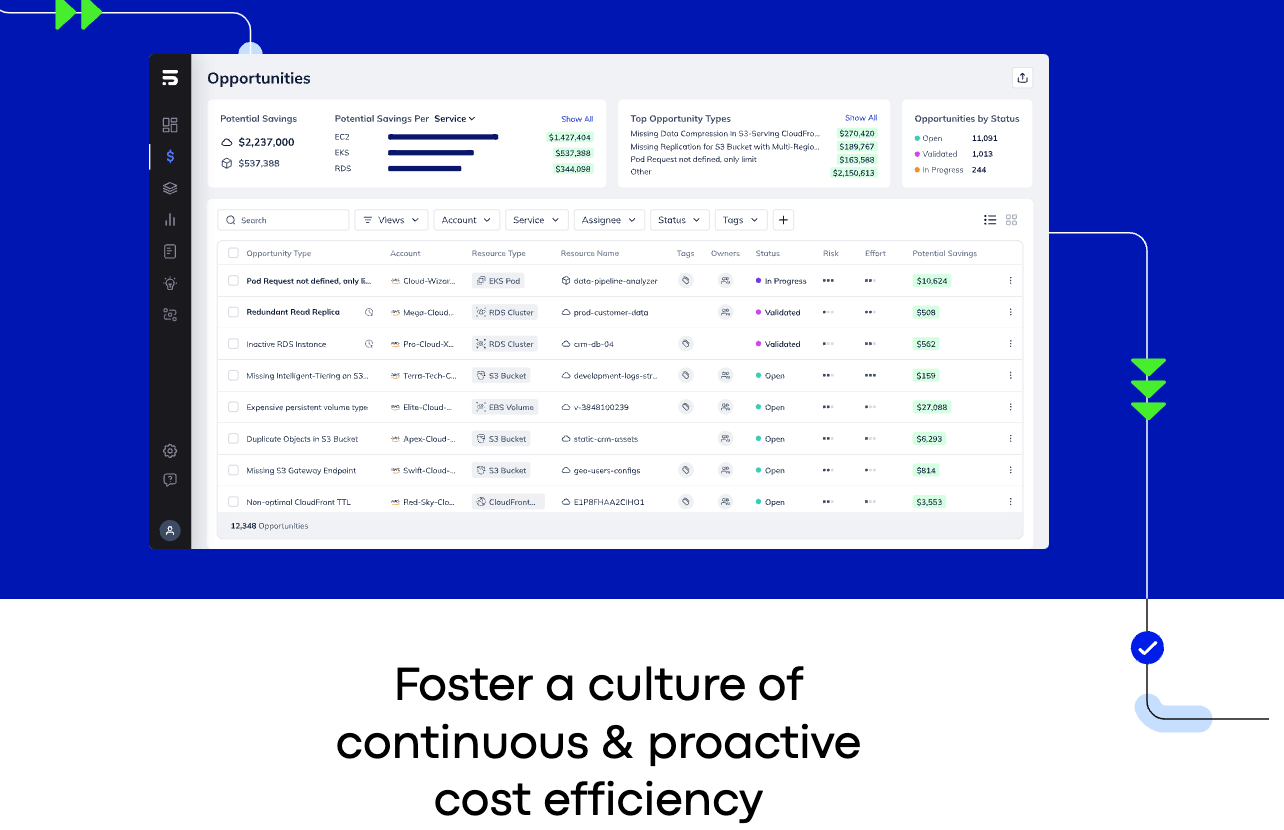
At the heart of PointFive’s innovation is what they call “DeepWaste detection technology.” This algorithm uncovers hidden inefficiencies and untapped savings opportunities that often go unnoticed. By continuously monitoring cloud resources, PointFive ensures that every dollar spent is optimized for maximum efficiency.
PointFive is about identifying cost-saving opportunities, but it goes beyond - empowering teams to continuously optimize costs. With step-by-step remediation workflows and seamless integration into existing processes, PointFive equips managers with the tools they need to create a culture of cost-accountability. They even map every resource directly to the engineer responsible, ensuring nothing falls through the cracks.
Why are they called PointFive? Their vision is to help customers save 50%-or point five of their costs. Talk about an impressive goal!
PointFive is a brilliant piece of Israeli innovation, based on a deep understanding of the cloud-cost challenges faced by modern enterprises. They are paving the way for a future where cloud computing is used to its true potential-cost-effective and sustainable.
Arbe - Revolutionizing Road Safety with 4D Imaging Radar
The vision of achieving zero road fatalities has long been a dream pursued by automotive innovators. Is this an achievable goal?
Arbe , a NASDAQ-traded Israeli company, is at the forefront of this pursuit, driving a revolution in automotive radar technology that could potentially make this dream a reality.
Their 4D imaging radars represent a groundbreaking leap forward in the realm of autonomous driving and advanced driver-assistance systems (ADAS). Unlike traditional radars, Arbe’s solution utilizes a technology that employs a vast array of radar beams to create ultra-high-resolution, 360-degree 3D images of the vehicle’s surroundings.
This detailed 3D imaging capability enables Arbe’s radars to track objects with unprecedented accuracy, identify potential hazards with greater reliability, and plan safer paths for vehicles. By eliminating false positives and negatives, which have been longstanding challenges in radar technology, Arbe’s radars are poised to resolve the leading causes of autonomous driving accidents.
One of the critical milestones in Arbe’s quest for zero road fatalities is their ability to detect stationary objects, a notorious stumbling block for traditional automotive radars. This capability not only meets stringent safety requirements set by organizations like the National Highway Traffic Safety Administration (NHTSA) and the New Car Assessment Program (NCAP) but also addresses a significant factor behind ADAS and Autopilot-related accidents.
While the pursuit of zero road fatalities may seem ambitious, Arbe’s innovative approach to radar technology demonstrates the potential of Israeli tech to revolutionize the automotive industry and bring us closer to that elusive goal.
Valens - Connecting the Dots in Automotive and AV Systems
From Arbe’s revolutionary radar technology to Valens Semiconductor’s seamless connectivity solutions, Israeli companies are driving the future of automotive innovation.
While Arbe focuses on enhancing vehicle perception, Valens ensures that all components within a vehicle can communicate effectively, creating a comprehensive ecosystem for safer and smarter transportation.
Valens Semiconductor is a NYSE-traded Israeli chipmaker specializing in chips that enhance connectivity in automotive and audio-visual systems. They are best known for inventing HDBaseT, the leading standard for long-reach multimedia connectivity in the pro-AV industry. HDBaseT enables the distribution of uncompressed video, audio, Ethernet, USB, controls, and power for distances up to 100 meters.
In the automotive sector, Valens’ chips connect various components such as cameras, sensors, and displays, which are crucial for advanced driver assistance systems and self-driving technologies. For example, the Mercedes-Benz MBUX infotainment system utilizes Valens’ chips to seamlessly connect screens, speakers, and controls. In trucks, their chips facilitate the connection of cameras and sensors between the truck and trailer, providing drivers with improved visibility and enhancing safety.
Outside of the transportation domain, Valens’ chips are also used in TVs, projectors, and speakers to transmit high-quality video and audio signals over long distances with a single cable.
With their cutting edge connectivity solutions, Valens is helping to build the next generation of connected, intelligent systems, and this is why I’m proud to feature them today.
Onyxia Cyber - Turning the tables on hackers with AI-based security programs
In the high-stakes cyber battleground, many organizations find themselves constantly on the defensive, reacting to security incidents after they’ve already inflicted damage. But what if there was a way to shift the paradigm, to become proactive, even predictive in your approach to cybersecurity? Enter Onyxia Cyber, an Israeli startup turning this vision into reality.
Interestingly, the name Onyxia Cyber is drawn from an iconic World of Warcraft character, a dragon capable of seamlessly shifting between its draconic and human forms, and the name embodies the adaptive, dynamic nature of their cybersecurity platform: their AI-driven solution empowers security leaders to proactively mold their defenses to match evolving threats.
The company recognizes the mounting pressure on CISOs to quantify and communicate the value of their efforts. According to Gartner, by 2026, 70% of corporate boards will include a member with dedicated cybersecurity expertise, intensifying the need for security leaders to convincingly demonstrate the business impact of their measures.
Onyxia’s platform is designed to address this very challenge. Through automated security program assessments, comprehensive security stack mapping, and predictive AI capabilities, the solution equips CISOs with a unified view of their cybersecurity posture, enabling them to identify gaps, optimize resource allocation, and proactively mitigate risks before they manifest as costly breaches.
Adaptability is vital in Israel’s culture, as it is in today’s cyberthreat landscape. Just as the mythical dragon Onyxia seamlessly transitions between forms, this Israeli startup empowers security leaders to stay one step ahead, molding their defenses to meet the risk landscape while aligning strategies with business objectives.
Wrapping Up
From the depths of the cloud to the frontiers of road safety, the Start-Up Nation’s innovative spirit is alive and kicking, tackling some of our most pressing challenges. Whether it’s optimizing cloud costs, revolutionizing automotive safety, enhancing connectivity, or predicting cybersecurity threats, Israeli startups are at the forefront, turning science fiction into reality.
Trust me, you won’t want to miss what’s coming next!
Originally published on LinkedIn.
New podcast
The Shift on YouTube
Conversations with the people building what comes next, before the future becomes obvious. Follow the show for new episodes as they land.
The Shift, in your inbox
Occasional essays on AI, cloud, and the systems shaping what comes next. Subscribe on LinkedIn — no spam, unfollow anytime.
Keep reading
Jev makes the call without making you wait
Jev cannot hold a conversation, yet it is on track to be one of the fastest-adopted models in history, because most of what software asks an AI to do was never a conversation in the first place.

We Gave a Baby a Chainsaw
This summer, AI agents canceled a stranger’s gym booking, fixed prices behind a rival’s back, and broke into one of AI’s most tightly guarded companies to steal a test’s answers, and in every case, it was humans who left the chainsaw within reach.

Every Reachable System Is Now Worth Attacking
In 1883 a Dutch linguist and cryptographer named Auguste Kerckhoffs laid down what became the closest thing computer security has to scripture: a system should remain secure even if everything about it, save the key, is public knowledge.
