You Can Outpace a Ten-Person Team. Alone.
AI dissolves the bandwidth constraint that made cross-functional teams necessary. One high-context person can now run the full loop - but only if coordination becomes architecture, not meetings.

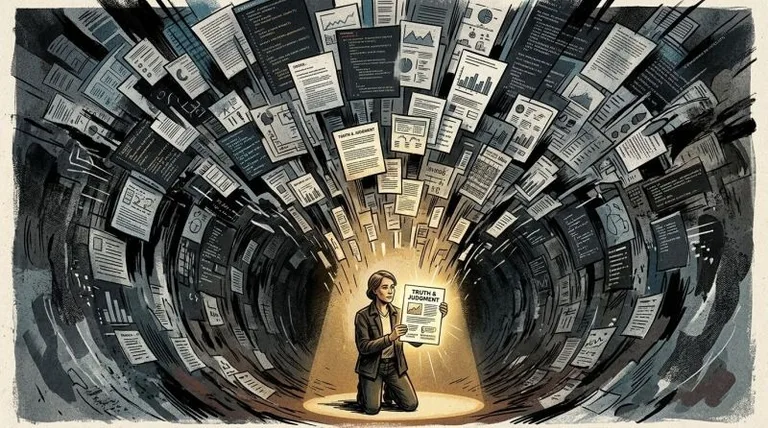
You can outpace a ten-person team. Alone.
Not because you’re faster. Because teams are slow.
Why did we divide work? Because no single person could hold enough context and execute across enough domains at once. So we hired specialists, built functions, and coordinated the whole thing. It worked. It was also slow, lossy, and expensive to run.
AI dissolves the bandwidth constraint. One high-context person with AI can now produce the strategy memo, run the analysis, draft the product spec, and build a working mockup before a cross-functional team finishes scheduling its first kickoff meeting.
I call this solo compression.
Three things follow:
- 01
The loop shortens
Every handoff converts intent into approximation. When one person does the full cycle, the question asked is closer to the question answered. The first artifact comes from whoever understands the problem, not from a chain of people interpreting context secondhand.
- 02
Execution becomes abundant. Judgment becomes scarce
AI generates endless plausible outputs. What it cannot do (for now) is know which plan is wise, which design fits this customer, or which strategic choice carries accountability. In a compressed loop, the valuable person carries full context, spans domains, and stands behind every output they produce.
- 03
Coordination becomes architecture
When loops compress into individual ownership, the coordination layer has to become structural: clear interfaces, shared standards, governance, institutional memory. Without it, solo compression produces “hero culture”. Fast, impressive, fragile.
The risk is that organizations are not just production systems. They are learning systems. If strong people consistently route around the team, junior people stop developing. The company looks efficient.
Until a key person leaves.
Knowing when solo is the right shape matters as much as being able to do it.
This is the future of humans in the workplace: Maximum autonomy at the edge. Maximum coherence at the center.
Originally published on LinkedIn.
New podcast
The Shift on YouTube
Conversations with the people building what comes next, before the future becomes obvious. Follow the show for new episodes as they land.
The Shift, in your inbox
Occasional essays on AI, cloud, and the systems shaping what comes next. Subscribe on LinkedIn — no spam, unfollow anytime.
Keep reading
Jev makes the call without making you wait
Jev cannot hold a conversation, yet it is on track to be one of the fastest-adopted models in history, because most of what software asks an AI to do was never a conversation in the first place.

We Gave a Baby a Chainsaw
This summer, AI agents canceled a stranger’s gym booking, fixed prices behind a rival’s back, and broke into one of AI’s most tightly guarded companies to steal a test’s answers, and in every case, it was humans who left the chainsaw within reach.

Every Reachable System Is Now Worth Attacking
In 1883 a Dutch linguist and cryptographer named Auguste Kerckhoffs laid down what became the closest thing computer security has to scripture: a system should remain secure even if everything about it, save the key, is public knowledge.
