When the Cloud Shakes
Every few months, the internet has its version of an earthquake. Yesterday, it was AWS. Tomorrow, it’ll be someone else. The pattern is always the same: a…

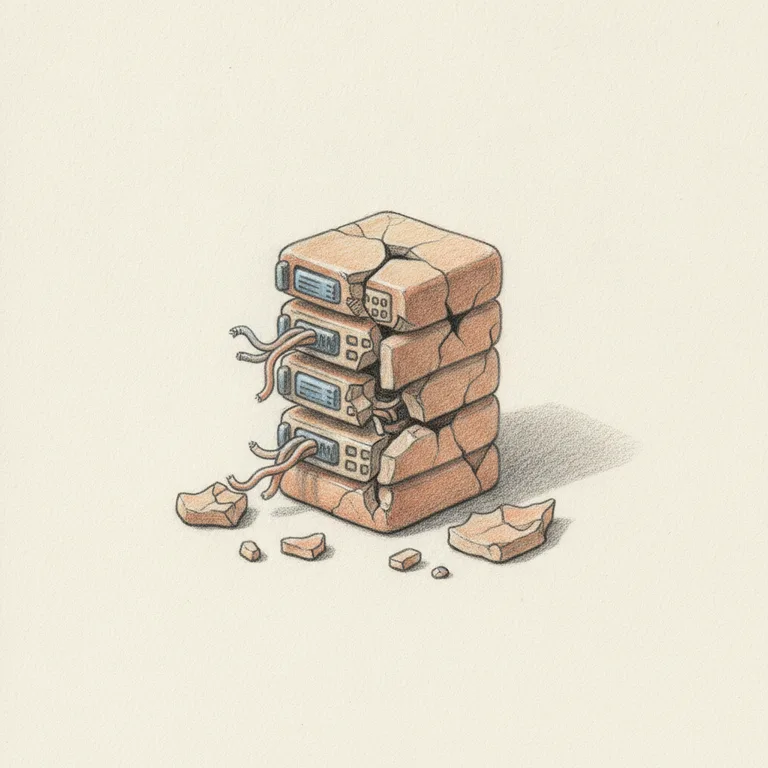
Every few months, the internet has its version of an earthquake. Yesterday, it was AWS. Tomorrow, it’ll be someone else. The pattern is always the same: a tiny internal misstep - DNS hiccup, configuration slip, stale dependency - ripples across the entire digital planet. Suddenly, your “five nines” SLA means absolutely nothing.
Let’s be clear: what failed wasn’t DNS. What failed was our collective illusion that putting everything in one hyperscaler’s basket is somehow “resilient.”
The AWS postmortem reads like a slow-motion avalanche: DNS issues at DynamoDB endpoints cascaded into EC2’s instance launch system, which broke load balancer health checks, which took down Lambda, CloudWatch, and SQS. That’s not a network issue. That’s a coupling issue. The deeper you tie your application logic to one provider’s internal control fabric, the more you inherit its weakest link.
And when that control plane stumbles, your business face-plants with it.
The Real Lesson: Independence, Not Faith
Resilience isn’t about trusting AWS, or Azure, or Google, to never fail. It’s about assuming they will fail, and still being able to function.
That starts with data independence. If your data lives in one place, controlled by one provider, then you don’t own your uptime - they do.
Resilience means:
- 01
Owning your data fabric
Your data should exist across clouds, regions, and even on-prem, synchronized but not trapped.
- 02
Designing for degraded operations
When control planes fail, your business should keep moving in a “limited autonomy” mode.
- 03
Separating control from compute
Identity, orchestration, and data replication should not depend on the same infrastructure you’re protecting against.
Yes, it’s hard. Yes, it costs more. But resilience isn’t about comfort. It’s about survival.
The Truth Nobody Likes to Admit
The AWS outage didn’t change anything fundamental, really. It just exposed what’s been obvious for years. Our digital world is brittle because we’ve traded autonomy for convenience. We treat the cloud as magic instead of infrastructure.
Real resilience doesn’t come from vendor promises or redundancy checkboxes. It comes from architecture that assumes the ground will move, and still stands when it does.
So, build like the quake is coming. Because it always is.
Originally published on LinkedIn.
New podcast
The Shift on YouTube
Conversations with the people building what comes next, before the future becomes obvious. Follow the show for new episodes as they land.
The Shift, in your inbox
Occasional essays on AI, cloud, and the systems shaping what comes next. Subscribe on LinkedIn — no spam, unfollow anytime.
Keep reading
SaaS-mageddon Is Real, but It’s Not the End of Software
The recent drop in SaaS valuations, despite healthy growth metrics, isn’t market panic or investors “not understanding AI yet.” It's a rational repricing of…

Global File Locking: Navigating the CAP Tradeoff in Distributed File Systems
When teams collaborate across continents, split-second timing matters-and losing a file can be as frustrating as missing the perfect seat on a flight. How global file locking balances consistency, availability, and performance.

Personalization: The Revolution that Puts You First
Remember the first time you held something truly handcrafted? The weight of a custom-made watch, the perfect fit of tailored clothing, or the smooth grip of…