When ChatGPT Beat an 80-Year Erdős Record
A deceptively simple question in combinatorial geometry stumped mathematicians for decades. A general-purpose AI found a new arrangement - and a proof that Erdős himself believed was impossible.

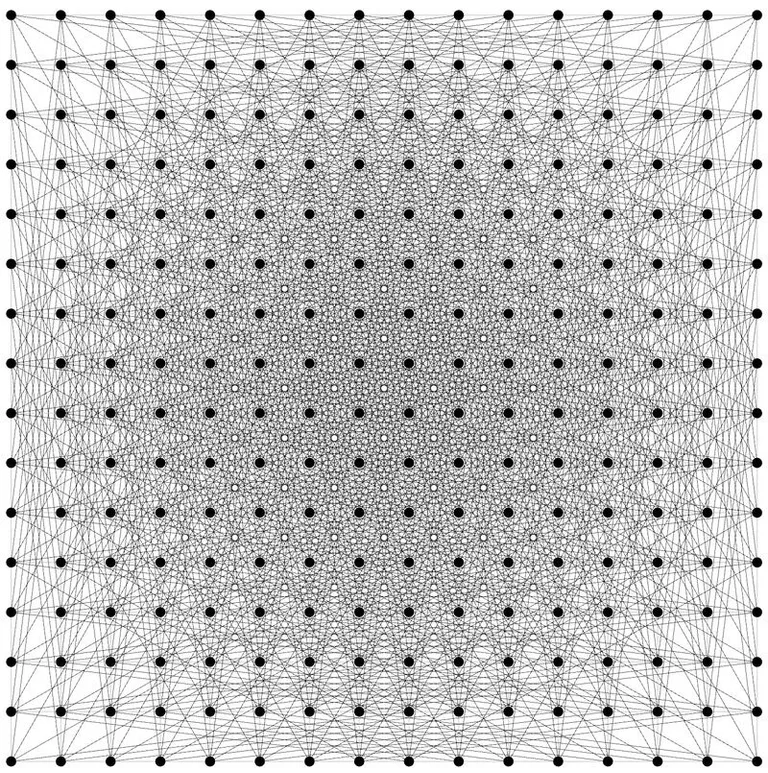
It’s a deceptively simple question: if you place n points in the plane, how many pairs of points can be exactly distance 1 apart?
This is one of the best-known questions in combinatorial geometry. Easy to state and remarkably difficult to resolve.
In 1946, Paul Erdős found a clever arrangement of points that set the record. He believed his own record couldn’t be beaten, but for 80 years, the mathematical community failed to prove it.
Until yesterday, when a general-purpose ChatGPT found the proof.
The surprising part is that Erdős was wrong. The AI found a new arrangement that beats his record. The proof is short, elegant, and entirely readable - that is, if you are a good mathematician. Not me.
What I keep thinking about isn’t how hard the proof was. It’s that for 80 years, almost everyone was trying to prove the opposite. Erdős himself believed improvement was impossible. As it turns out, he was wrong.
The discovery came from a model with no investment in the 80-year-old consensus, free to pursue an answer that generations of experts had set aside.
Originally published on LinkedIn.
New podcast
The Shift on YouTube
Conversations with the people building what comes next, before the future becomes obvious. Follow the show for new episodes as they land.
The Shift, in your inbox
Occasional essays on AI, cloud, and the systems shaping what comes next. Subscribe on LinkedIn — no spam, unfollow anytime.
Keep reading
Jev makes the call without making you wait
Jev cannot hold a conversation, yet it is on track to be one of the fastest-adopted models in history, because most of what software asks an AI to do was never a conversation in the first place.

We Gave a Baby a Chainsaw
This summer, AI agents canceled a stranger’s gym booking, fixed prices behind a rival’s back, and broke into one of AI’s most tightly guarded companies to steal a test’s answers, and in every case, it was humans who left the chainsaw within reach.

Every Reachable System Is Now Worth Attacking
In 1883 a Dutch linguist and cryptographer named Auguste Kerckhoffs laid down what became the closest thing computer security has to scripture: a system should remain secure even if everything about it, save the key, is public knowledge.
